Vintage Decorative Header or Footer 4: An Intricate Design Asset
Understanding the Intricate Appeal of This Vintage Ornament
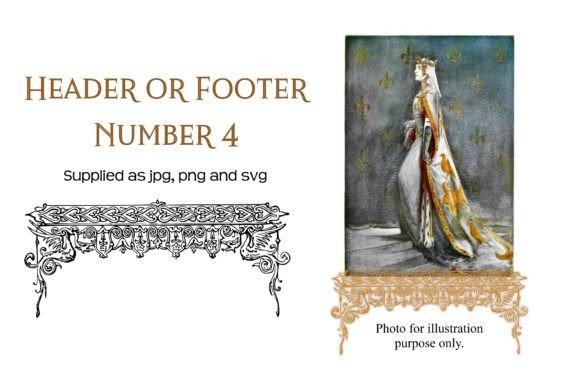
In the realm of modern typography, there is a distinct hunger for texture, history, and personality. While clean sans serif fonts dominate the digital landscape for utility, the "Vintage Decorative Header or Footer 4" serves a completely different purpose. It is not merely a typeface; it is a piece of design assets engineering. This specific piece is an intricate, detailed vintage decorative design, characterized by complex linework, flourishes, and a sense of symmetry that harkens back to the era of letterpress printing and Victorian engraving.
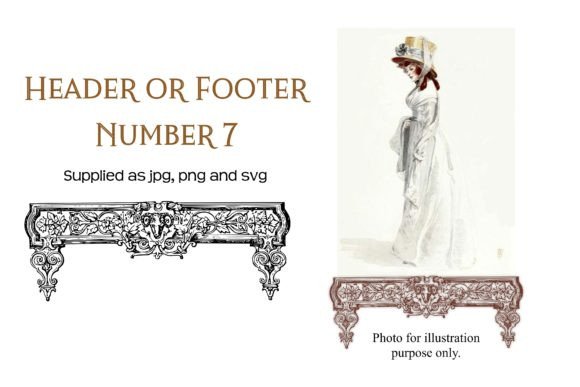
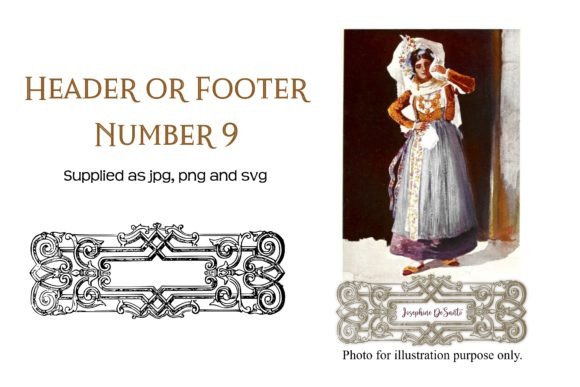
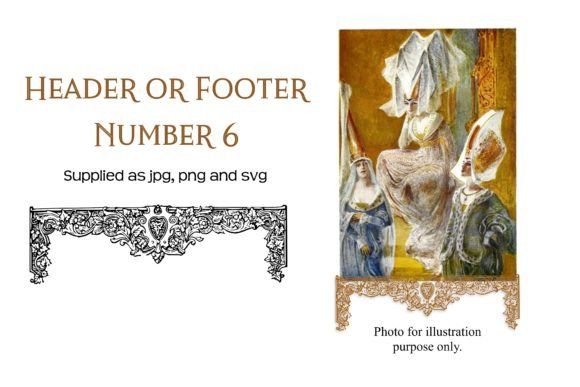
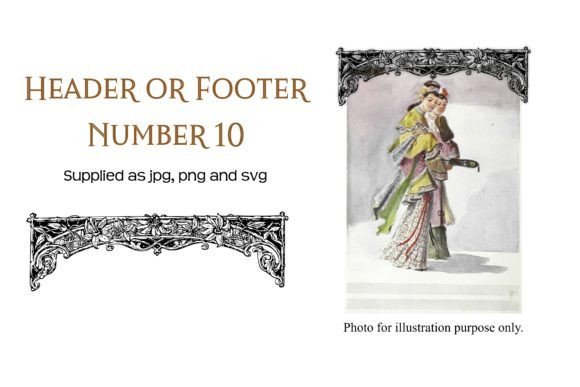
Visually, the asset features the kind of ornamental detail that is difficult to recreate manually without hours of vector work. It balances negative space with positive space in a way that feels heavy yet elegant. Unlike a standard serif font or sans serif font, this design carries a "personality" of refinement and tradition. It projects an air of craftsmanship and timelessness. For the designer, this is a premium font asset that instantly elevates a project from "assembled" to "designed." It commands attention at the top of a page or grounds the layout at the bottom, acting as a visual anchor that frames your content.
Strategic Applications: Branding, Editorial, and Packaging
The true power of Vintage Decorative Header or Footer 4 lies in its versatility across different mediums. For brand identity, this asset is invaluable for businesses looking to project heritage, luxury, or artisanal quality. Imagine a craft distillery, a bespoke tailor, or a high-end bakery. Using this design element in their logo design or across their stationery immediately communicates a story of quality and tradition without saying a word. It works exceptionally well as a divider in long-form text or as a frame for a monogram.
In editorial design and packaging design, the ornament shines when used to separate chapters, highlight pull quotes, or adorn the flaps of a product box. Because it is supplied as JPG, PNG, and SVG, it offers maximum flexibility. The SVG format is particularly useful for web design, allowing you to scale the asset infinitely without losing quality, ensuring your site loads fast while maintaining crisp lines on Retina displays. Conversely, the PNG with transparency is perfect for layering over photography in social media graphics or digital newsletters.
Enhancing Visual Hierarchy and Audience Engagement
A common struggle in layout design is establishing a clear visual hierarchy. We often rely on font size and weight to tell the reader where to look first. However, decorative elements like Vintage Decorative Header or Footer 4 provide a non-verbal cue that guides the eye. Placing this intricate design above a title doesn't just fill space; it creates a "gateway" into the content. It signals to the reader that what follows is important and curated.
This engagement is crucial for small business owners and content creators trying to stand out in a crowded market. When used in a wedding invitation, for instance, the complexity of the design implies a level of formality and care. In a digital context, such as a PDF lead magnet or an e-book, it breaks the monotony of plain text, reducing cognitive load and making the reading experience more enjoyable. It influences brand perception by adding a layer of professionalism that generic templates lack.
Practical Implementation and Font Pairing
When integrating a creative font asset like this, the golden rule is contrast. Because Vintage Decorative Header or Footer 4 is inherently busy and detailed, the accompanying typography must be clean and legible. This is where your choice of body copy comes in. A clean serif font like Garamond or a geometric sans serif font like Montserrat creates a perfect counterbalance. You want the ornament to be the star; pairing it with a highly stylized script font or an overly ornate handwritten font will result in visual clutter, ruining the readability of your project.
From a technical standpoint, always consider the color palette. This design works beautifully in monochrome—black on white or white on a dark background—but it can also be tinted to match a specific brand color palette. However, ensure there is enough contrast so the intricate details of the SVG or PNG don't bleed into the background. Before finalizing, always test the asset at the size it will be viewed. A header that looks like a cohesive block on a poster might look like visual noise on a mobile screen if scaled down too much.
Licensing and Commercial Usage
For entrepreneurs and marketers, the practicality of licensing cannot be overlooked. Because this asset is intended for both personal and commercial use, it serves as a reliable tool for logo design, merchandise, and client work. However, always double-check the specific terms regarding digital resale. Generally, using it as part of a flattened design for a client is permissible, but reselling the raw asset file itself is prohibited. This ensures that your brand identity remains unique to you.
Ultimately, Vintage Decorative Header or Footer 4 is more than just a clipart image; it is a sophisticated tool for typography and layout. Whether you are a hobbyist creating a scrapbook, a publisher laying out a historical fiction novel, or a designer